
One-Time Offer (OTO): What It IS and How It Works
Imagine you've just bought something online. You've entered your payment details, completed your purchase, and you're expecting to see a thank you page next. But instead, another page appears offering you something else. Maybe it's an upgrade, an add-on, or another product related to what you just bought.
This is commonly known as a one-time offer, or OTO. If you've come across the term while learning about sales funnels and aren't quite sure what it means, let's go through what an OTO is, where it appears in a funnel, how it works, and whether you actually need one.
What Is a One-Time Offer (OTO)?
A one-time offer (OTO) is an additional offer that's shown to someone at a specific point in their customer journey, usually right after they've made a purchase. For example, someone buys an online course. After completing their payment, they're shown another page offering them a workbook that goes along with the course. They can choose to buy the workbook or say no and continue.

The important thing here is that their original purchase has already been completed. The OTO is a separate and optional purchase. Whether they accept or decline it shouldn't affect what they've already bought.
You'll sometimes see OTO used slightly differently depending on the marketer or funnel platform you're learning from. Some use it specifically for an offer shown immediately after a purchase, while others use it more generally for post-purchase offers. So don't worry too much if you come across slightly different definitions. The basic idea is that another offer is being presented at a particular point in the funnel.
Why Is It Called a “One-Time” Offer?
The “one-time” part usually refers to the offer being presented at a particular moment in the customer's journey. For example, they might only see the offer immediately after completing their original purchase. But this doesn't always mean the product itself can never be purchased again. Depending on the business, the same product may still be available somewhere else later.
If you're telling customers that this really is their only chance to get the offer at that price or under those conditions, make sure that's actually true. There's no need to create fake urgency just because it's called a one-time offer.
Where Does an OTO Appear in a Sales Funnel?
A common place for an OTO is after the customer completes their original purchase but before they reach the thank you page. A simple funnel might look like this:
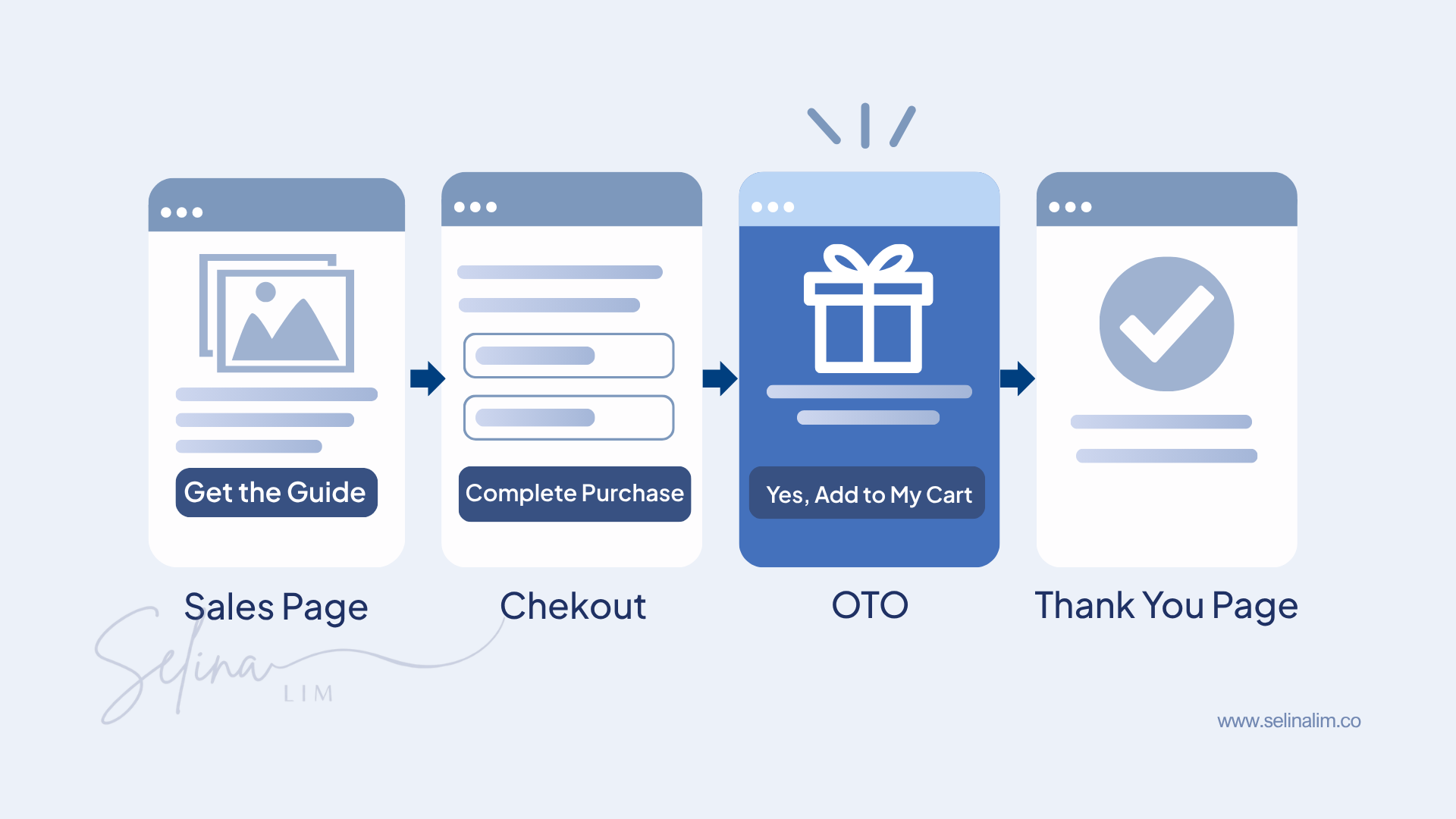
By the time the customer sees the OTO, their original purchase has already been completed. The OTO is simply an additional offer they can choose to accept or decline before continuing to the thank you page.
What Happens If They Accept the OTO?
If they decide they want the additional offer, they'll purchase it and then continue through the funnel:
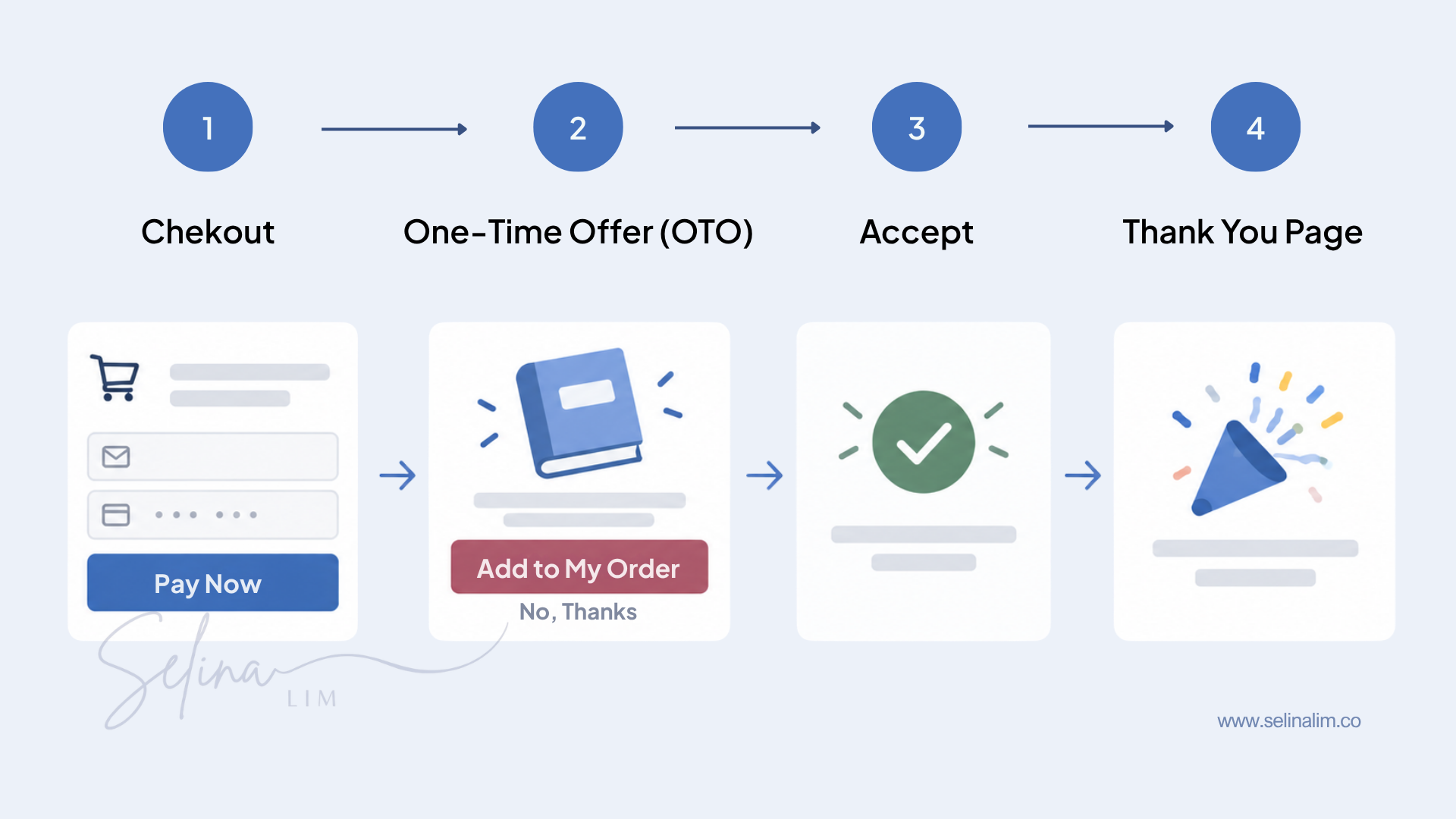
Depending on how the funnel is set up, the customer may be able to add the OTO with a single click instead of entering all their payment information again. You may hear this called a one-click upsell.
What Happens If They Decline the OTO?
If they don't want it, they can simply decline the offer and continue:
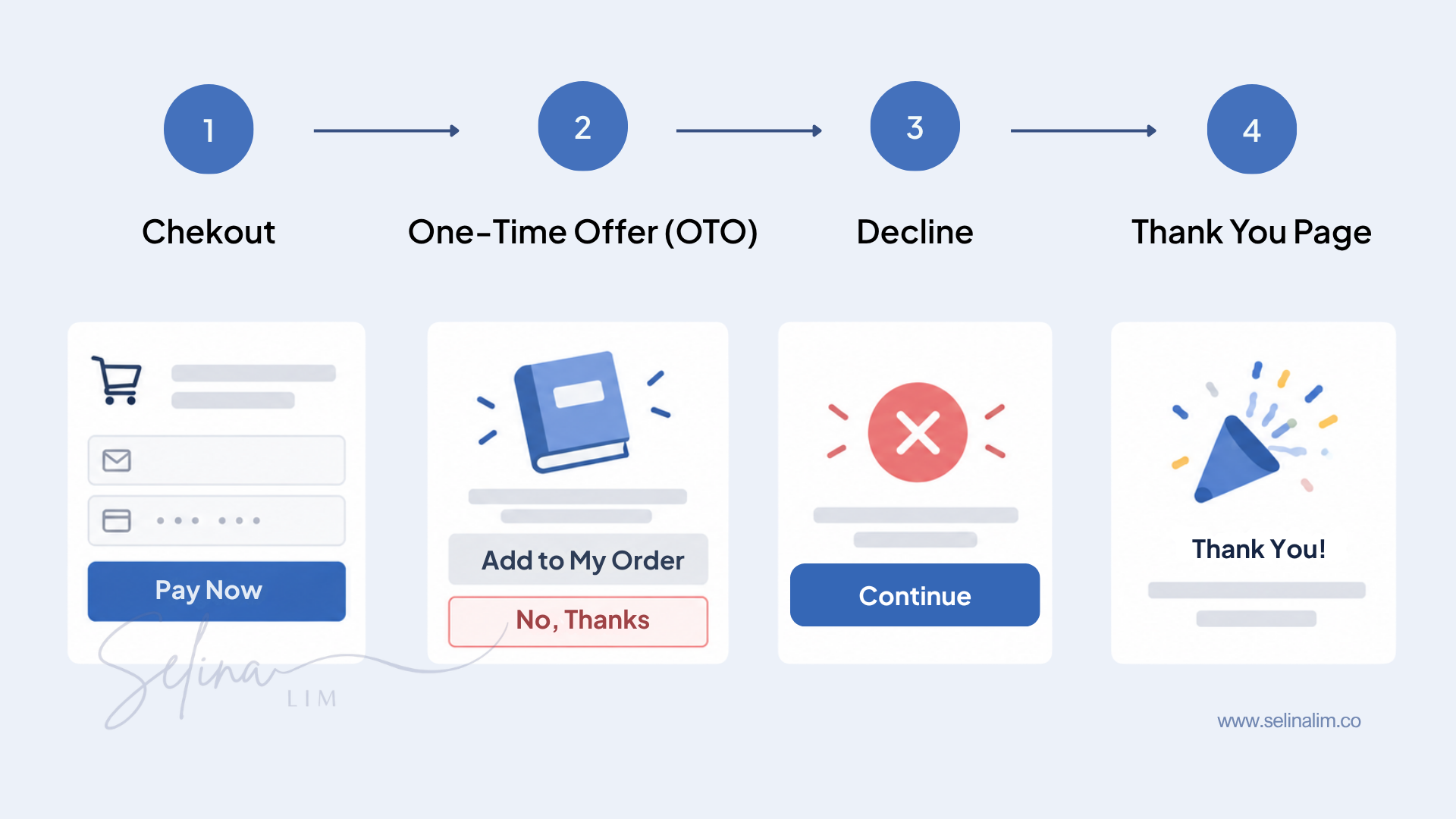
Their original purchase still remains the same. Some funnels may show another offer after someone declines the first one. This is commonly called a downsell:
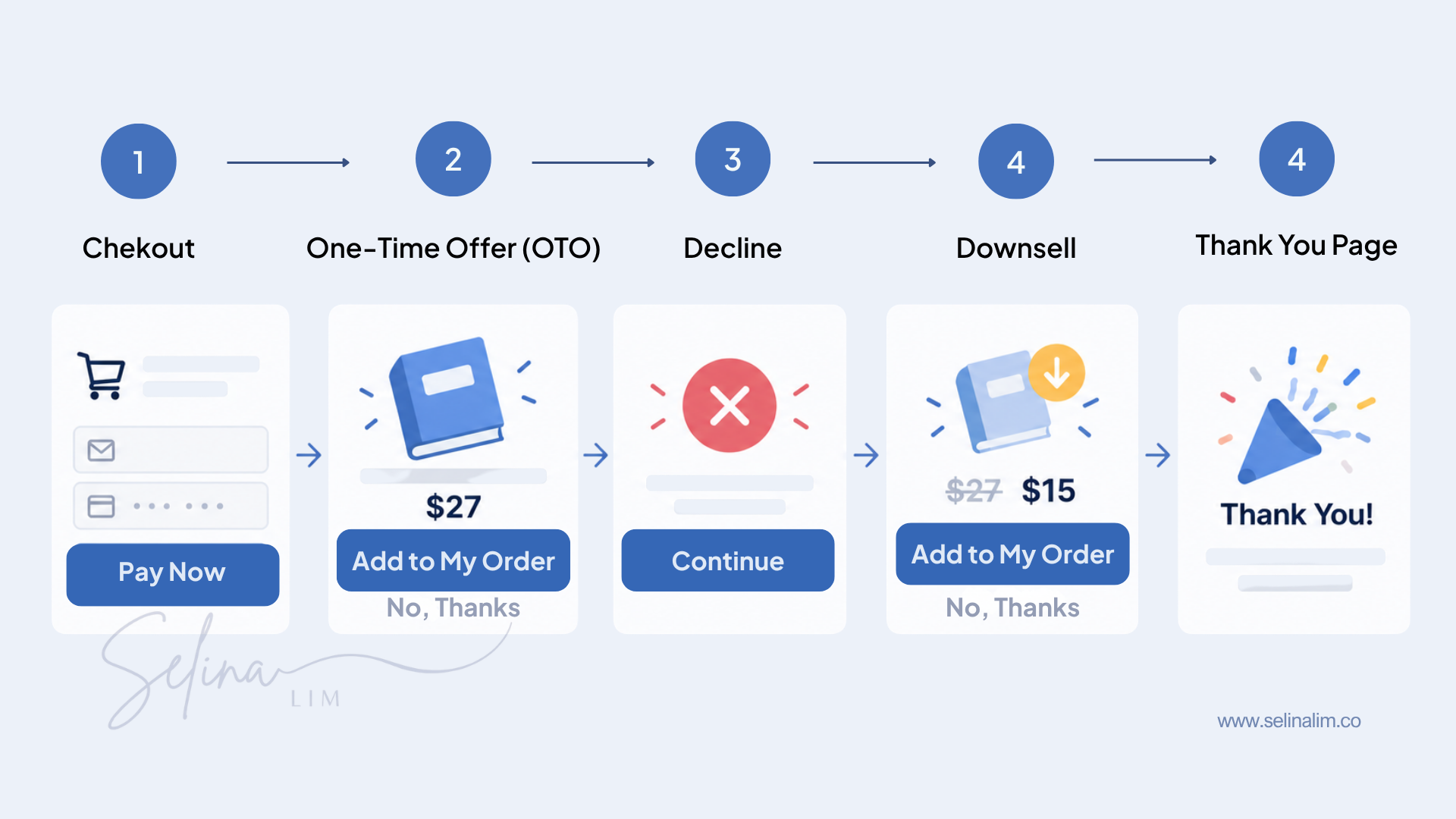
A downsell might be a lower-priced or simpler alternative to the offer they just declined. You don't necessarily need this extra step, but it's useful to understand what it means if you come across the term while building a funnel.
OTO vs Upsell: What's the Difference?
This is where things can get a little confusing because you'll often see OTO and upsell used together. An upsell generally refers to an additional or upgraded offer made to a customer, while an OTO usually refers to an offer that's presented at a particular point in the funnel, often immediately after the initial purchase. This means an OTO can also be an upsell.
For example, imagine someone buys an online course. Immediately after checkout, they're offered an upgraded package that includes additional templates and resources. That could be described as a post-purchase upsell, an OTO, or even a one-click upsell depending on how the funnel is set up and the terminology the platform uses.
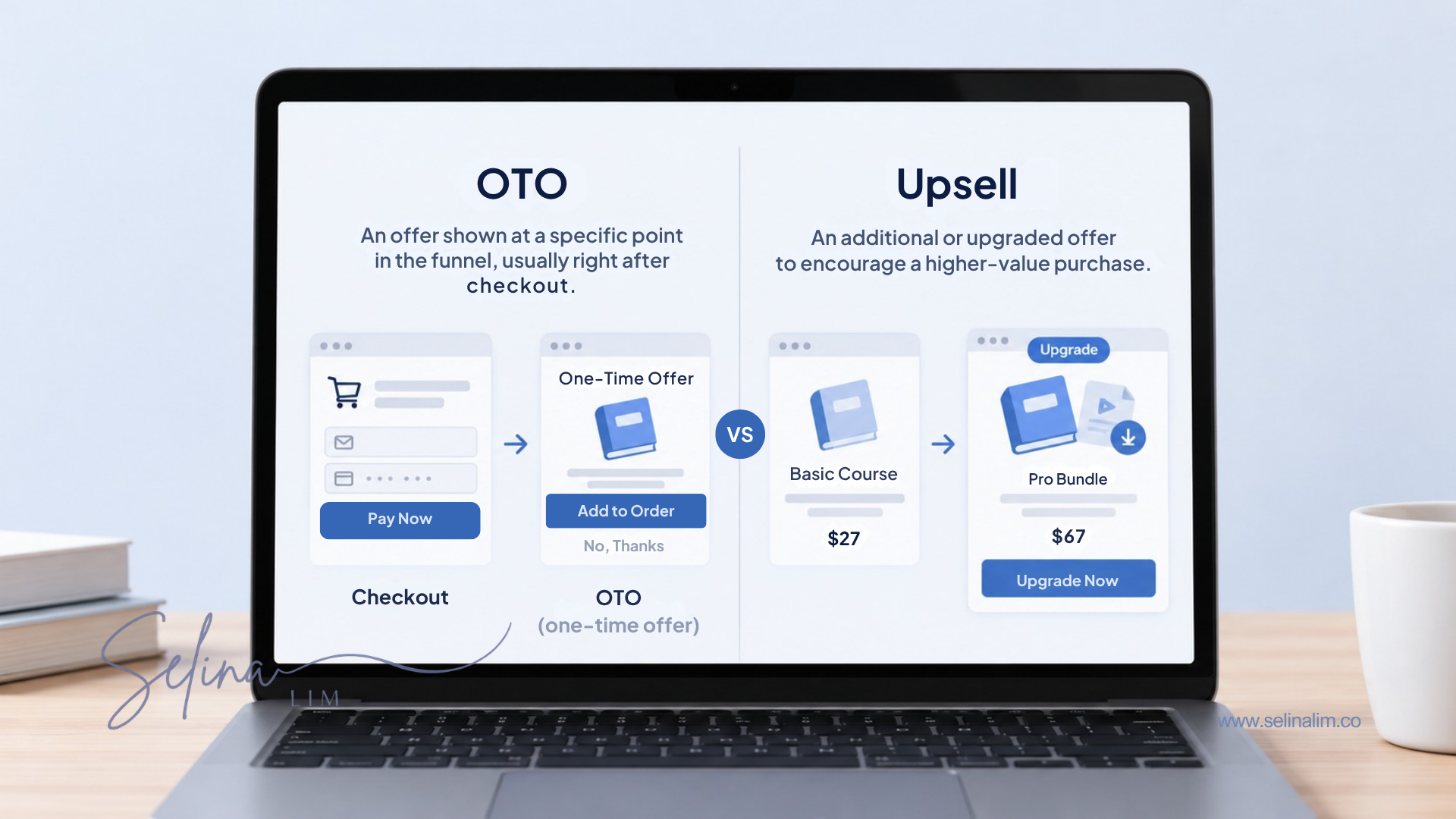
The terms aren't always used in exactly the same way, so rather than getting too caught up in the label, think about where the offer appears and what the customer is actually being offered.
OTO vs Order Bump: What's the Difference?
An order bump is another type of additional offer you might come across when building a sales funnel. The easiest way to understand the difference between an order bump and an OTO is to look at when the customer sees it.
An order bump normally appears during checkout, before the customer completes their original purchase. For example, someone is buying a workshop. On the checkout page, there's a checkbox that lets them add a workbook for an additional $7. If they want it, they tick the box and pay for everything together.
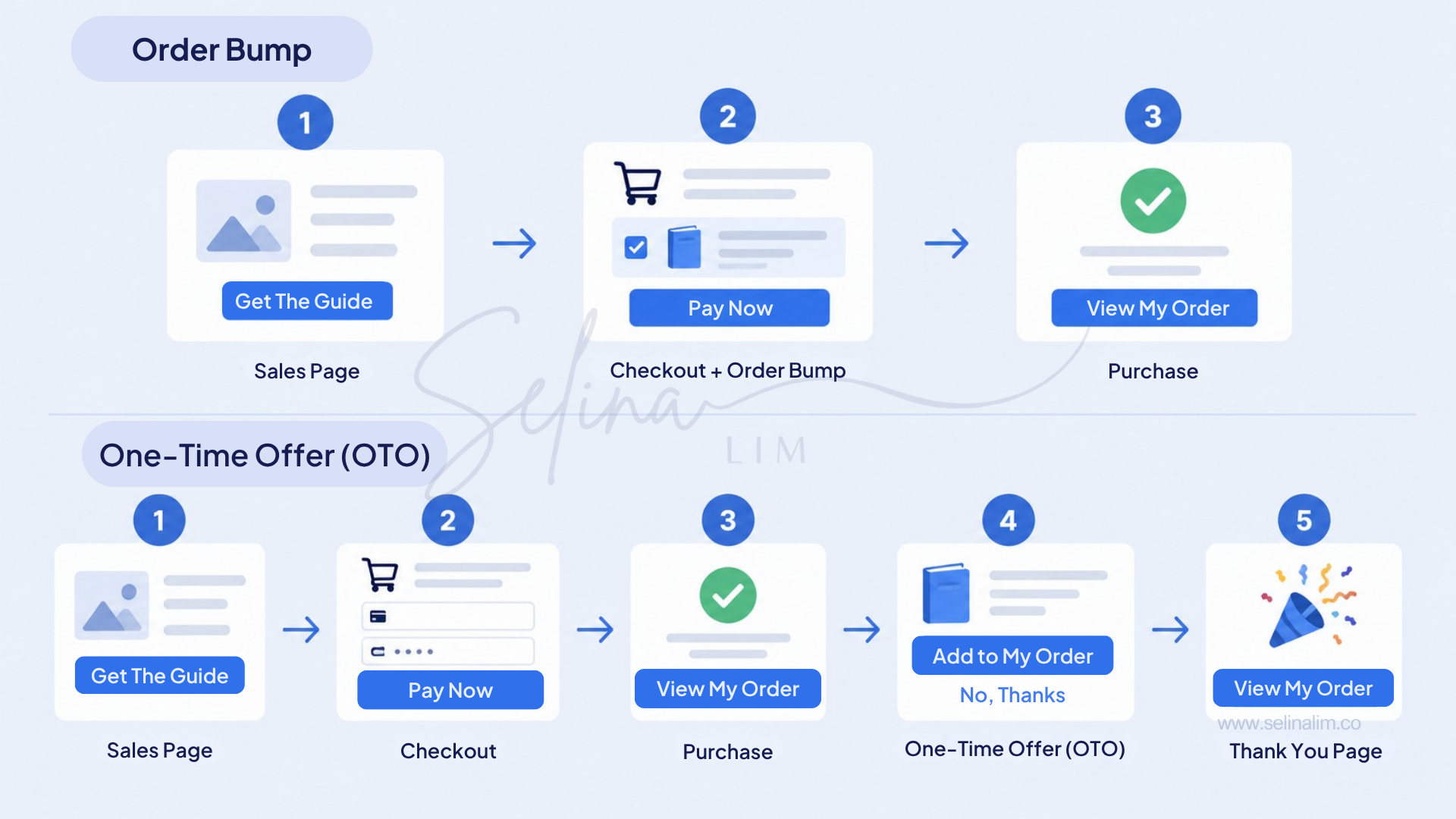
An OTO usually appears after that original purchase.
So you could technically offer the exact same workbook in both examples. If it's offered as an optional add-on during checkout, it's an order bump. If the customer completes their purchase first and then sees the workbook on another offer page, it may be presented as an OTO.
What Can You Offer as an OTO?
When deciding what to offer as an OTO, think about what would be useful or relevant to someone based on what they just bought.
If someone buys... | The OTO could be... |
|---|---|
An online course | Templates, a workbook or additional resources |
A digital guide | A workbook, toolkit or other implementation resources |
A service | An additional service or add-on |
Software | An additional feature or upgrade |
A physical product | A complementary product |
The OTO doesn't have to be complicated. It should be related to what the customer has already bought and useful to them in some way.
If someone buys Product A and your immediate next offer has nothing to do with Product A or what they're trying to achieve, it can easily feel like you're just trying to sell them something else. So think about what someone who bought your original product might actually find useful alongside it.
What Does a One-Time Offer Look Like?
Let's say you're selling a $27 positioning workshop. Someone lands on your sales page, decides the workshop is right for them and completes their purchase. Before they reach the thank you page, they're shown another offer: a $17 positioning workbook that includes exercises and templates to help them put what they'll learn in the workshop into practice.
The journey looks like this:
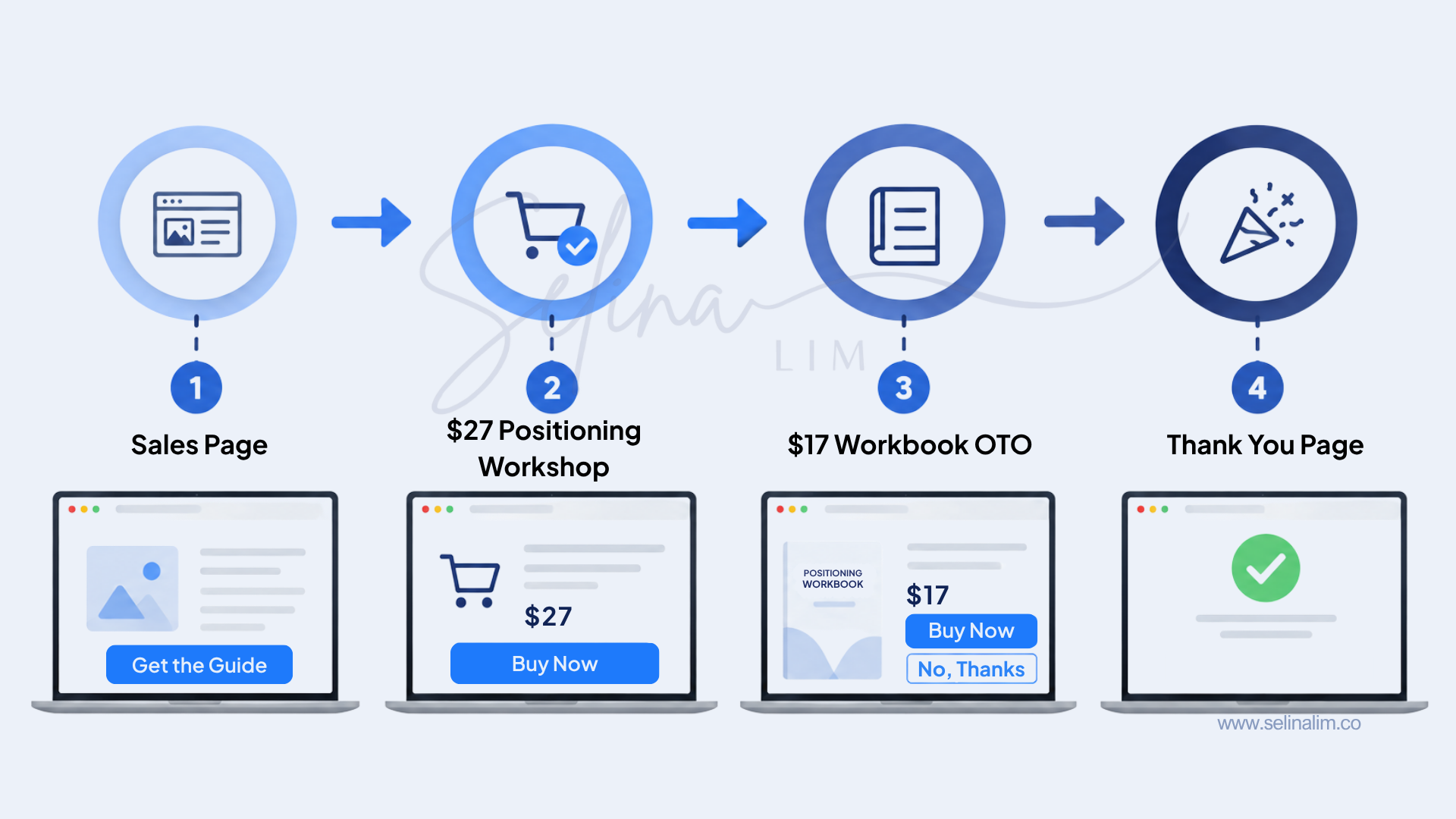
The customer can either add the workbook or decline it. Either way, they continue to the thank you page afterward. The workbook here will makes sense as an OTO because someone who has just bought a positioning workshop may also find a workbook that helps them apply what they're learning useful. That's the kind of connection to look for when choosing an OTO.
Look at Your OTO From Your Customer's Point of View
There's another side to an OTO that's easy to forget when you're building the funnel. Consider what's happening from your customer's point of view. They've just entered their payment details and clicked the purchase button. At this point, they might be wondering: Did my payment go through? Where do I access what I bought? What happens next?
And instead of immediately getting those answers, they're shown another offer. That doesn't automatically make an OTO a bad thing. But if you're going to show someone another offer at this point, it needs to be relevant to what they just bought.

Before adding one, check:
Does this offer make sense based on what they just bought?
Would it actually be useful to them?
Is it clear that this is another, optional purchase?
Is the additional price obvious?
Can they easily say no and continue?
Will this help them get more value from what they already bought?
If I'm saying this offer is only available now, is that actually true?
Go through the funnel yourself as though you're the customer. If you're confused about whether you've already paid, whether you need the additional product, or how to move past the offer, there's a high chance your customer will be confused too.
What Happens After the OTO?
Whether someone accepts or declines your OTO, they still need to know what happens next. This is where your thank you page comes in.
The thank you page should make it clear that their purchase was successful and explain what they need to do next. Depending on what you're selling, that might include confirmation of their original purchase, confirmation of the OTO purchase if they accepted it, what they purchased, how they'll receive or access it, what they need to do next, and whether they should expect an email from you.
Don't treat the thank you page as somewhere to send people just because the funnel needs somewhere to end. It's still part of the customer's experience, so it's important to think about what you should put on your thank you page and what information someone will need once they get there.
So, Should You Add an OTO to Your Funnel?
You don't need an OTO just because you've seen other funnels using one. Whether you should add one depends on what you're selling and whether you have something relevant to offer next.
Maybe you have an add-on, upgrade, template, resource or complementary product that would be useful alongside the original purchase. In that case, an OTO could be a useful addition to the funnel. But if you're struggling to think of something relevant and you're only adding another offer because you feel like your funnel is supposed to have one, then you probably don't need it.

There's nothing wrong with sending someone directly to the thank you page. An OTO should add something useful to the customer's journey, not just another step for them to go through.
Frequently Asked Questions
What Does OTO Mean in Marketing?
OTO stands for One-Time Offer. In marketing and sales funnels, it usually refers to an additional offer shown at a specific point in the customer's journey, often immediately after they complete their initial purchase.
Is an OTO the Same as an Upsell?
Not necessarily. An upsell is an additional or upgraded offer made to a customer, while OTO usually describes an offer presented at a particular point in the funnel. An OTO can therefore also be an upsell, and you'll sometimes see the terms used interchangeably.
Where Does an OTO Go in a Sales Funnel?
An OTO commonly appears after someone completes their initial purchase but before they reach the thank you page:
Sales Page → Checkout → OTO → Thank You Page
What Happens If Someone Declines an OTO?
Declining an OTO shouldn't affect the customer's original purchase. They will usually continue to the thank you page, although some funnels may show them a downsell first.
Can You Have More Than One OTO?
Yes. A funnel can have more than one post-purchase offer, but that doesn't mean you need to keep adding them. The more offers you add, the more steps you're asking your customer to go through, so only include them when they're actually useful and relevant.
Does Every Sales Funnel Need an OTO?
No. An OTO is optional. If you have a relevant additional offer that naturally follows what the customer has already purchased, you can consider adding one. If you don't, then sending them directly to the thank you page is perfectly fine.


